




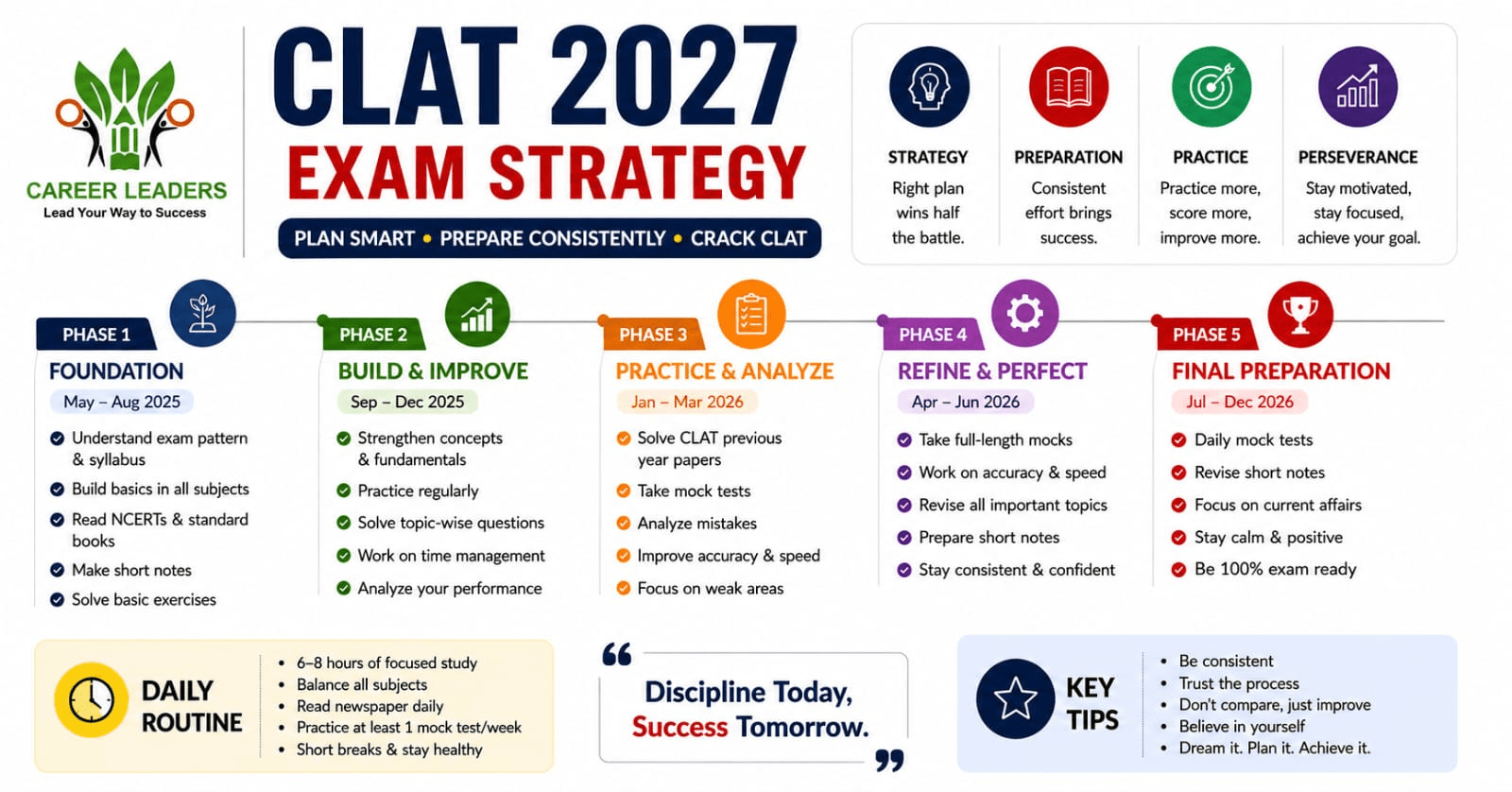
Are you considering taking the Common Law Admission Test (CLAT) after completing your graduation? The answer is yes, you can! There is no upper age limit for appearing in the CLAT exam, which means that graduates are eligible to take the test. However, there are a few important factors to keep in mind if you plan to pursue CLAT after completing your undergraduate degree.

Eligibility Requirements: To be eligible for the CLAT exam, regardless of whether you are a graduate or not, you must have passed your Class 12 or equivalent exam from a recognized board.
Challenges and Considerations:
Competition: As a graduate, you will likely find yourself competing with candidates who have recently completed their high school education. While your life experience and maturity can be advantages, you will also need to compete with younger candidates who may have more recently studied the CLAT syllabus.
Refreshing Your Knowledge: If you’ve been out of school for some time, you may need to refresh your memory on certain topics covered in the CLAT exam, such as legal reasoning, quantitative ability, and logical reasoning.
Adjusting Your Study Schedule: Graduates often have work or other commitments, which means you may need to adjust your study schedule to accommodate your existing responsibilities. This could involve studying in the evenings or on weekends.
Advantages:
Despite the challenges, there are advantages to pursuing CLAT after graduation. For instance, you may have a clearer career path in mind and potentially more financial resources to support your studies.
Tips for Success:
If you’re a graduate planning to take CLAT, here are some tips to enhance your preparation:
Start Early: Given the extensive CLAT syllabus, early preparation is crucial to cover all topics thoroughly and practice solving various question types.
Create a Study Plan: Develop a study plan and stick to it as closely as possible to ensure comprehensive coverage of the syllabus.
Quality Study Material: Choose high-quality, up-to-date study materials that align with the CLAT syllabus.
Mock Tests: Regularly solve mock tests to improve time management skills and identify areas of weakness for focused improvement.
Seek Guidance: Don’t hesitate to seek help from teachers, tutors, or mentors if you encounter challenges with specific topics or concepts.
Taking the CLAT exam after graduation is indeed possible, and with diligent preparation and a structured approach, you can increase your chances of success in this highly competitive law entrance examination. Good luck with your CLAT journey!
Certainly, here’s some additional information about taking the CLAT exam after graduation:
Advanced Preparation: Given that CLAT is a highly competitive exam, it’s essential to recognize that early and well-planned preparation is the key to success. Graduates should commence their CLAT preparation as early as possible to allocate sufficient time for a comprehensive review.
Tailored Study Plan: Graduates should create a personalized study plan that takes into account their specific strengths and weaknesses. Focus on areas that may need more attention while maximizing the advantage of your life experience and maturity.
Work-Life Balance: If you’re a working professional, finding the right work-study balance is crucial. It may require discipline and time management to juggle your career responsibilities with CLAT preparation effectively.
Coaching Institutes: Many graduates opt to join coaching institutes specializing in CLAT preparation. These institutes offer structured guidance, experienced faculty, and study materials designed for CLAT. Consider enrolling in a reputable coaching program to enhance your chances.
Online Learning: Given the flexibility it offers, online learning is an excellent option for graduates preparing for CLAT. Numerous online platforms provide comprehensive CLAT courses, allowing you to study at your convenience.
Previous Academic Knowledge: Graduates from diverse academic backgrounds often bring unique perspectives and skills to CLAT preparation. Leverage your previous academic knowledge to excel in sections where you have an advantage.
Consistent Practice: Regular practice is crucial. Solve a variety of sample papers, previous years’ question papers, and participate in mock tests to develop a strong test-taking strategy and assess your progress.
Peer Support: Consider forming or joining study groups with fellow CLAT aspirants, including both graduates and undergraduates. Collaborative study sessions can provide valuable insights and diverse perspectives.
Stay Informed: Keep yourself updated on current affairs and legal developments, as they are integral parts of the CLAT syllabus. Reading newspapers and legal magazines can be beneficial.
Maintain Confidence: While the competition may be fierce, maintain confidence in your abilities. Your unique background and life experiences can be assets in the exam and during the subsequent interview rounds.
Time Management: Graduates may have additional responsibilities or work commitments. Effective time management is key to balancing CLAT preparation with other obligations. Create a study schedule that accommodates your daily routine.
Keep an Eye on Deadlines: Be aware of CLAT exam dates, application deadlines, and admission procedures for both LL.B. and LL.M. programs. Missing deadlines can be a setback.
In conclusion, graduates can indeed pursue the CLAT exam successfully with thorough preparation and a structured approach. It’s essential to adapt your study plan and schedule to your individual circumstances while making the most of your advantages. Stay focused, practice consistently, and stay informed to achieve your goal of cracking the CLAT exam and securing admission to a prestigious law school.















































































































































































































0 Comments